Tuesday, 6 December 2016

The 5 biggest problems with Ecommerce payment gateways

What to avoid when looking for Ecommerce payment solutions

For most ecommerce retailers, payment gateways are seen as a necessary evil. Yes, they help you accept payments from your customers, but they’re not at the top of your list of organizations you like working with. They’ve developed a reputation of being sleazy, money-grubbing middlemen that take advantage of retailers, both big and small.

Some modern payment gateways, like Stripe, Braintree, and Sezzle, are finding ways to create more value for retailers and they’ve developed good reputations because of that. But problems remain. And if payment gateways want to shake their negative image within the e-commerce community, these are the five things they should focus on improving first.

1. They’re too expensive.

Payment gateways have long been rebuked by retailers for their high processing costs. The average rate today is 2.9% + 30c per transaction for online, or card-not-present, transactions. These costs have slowly increased for retailers, while the underlying cost and risk associated with processing these payments have decreased for gateways. How does that make any sense?
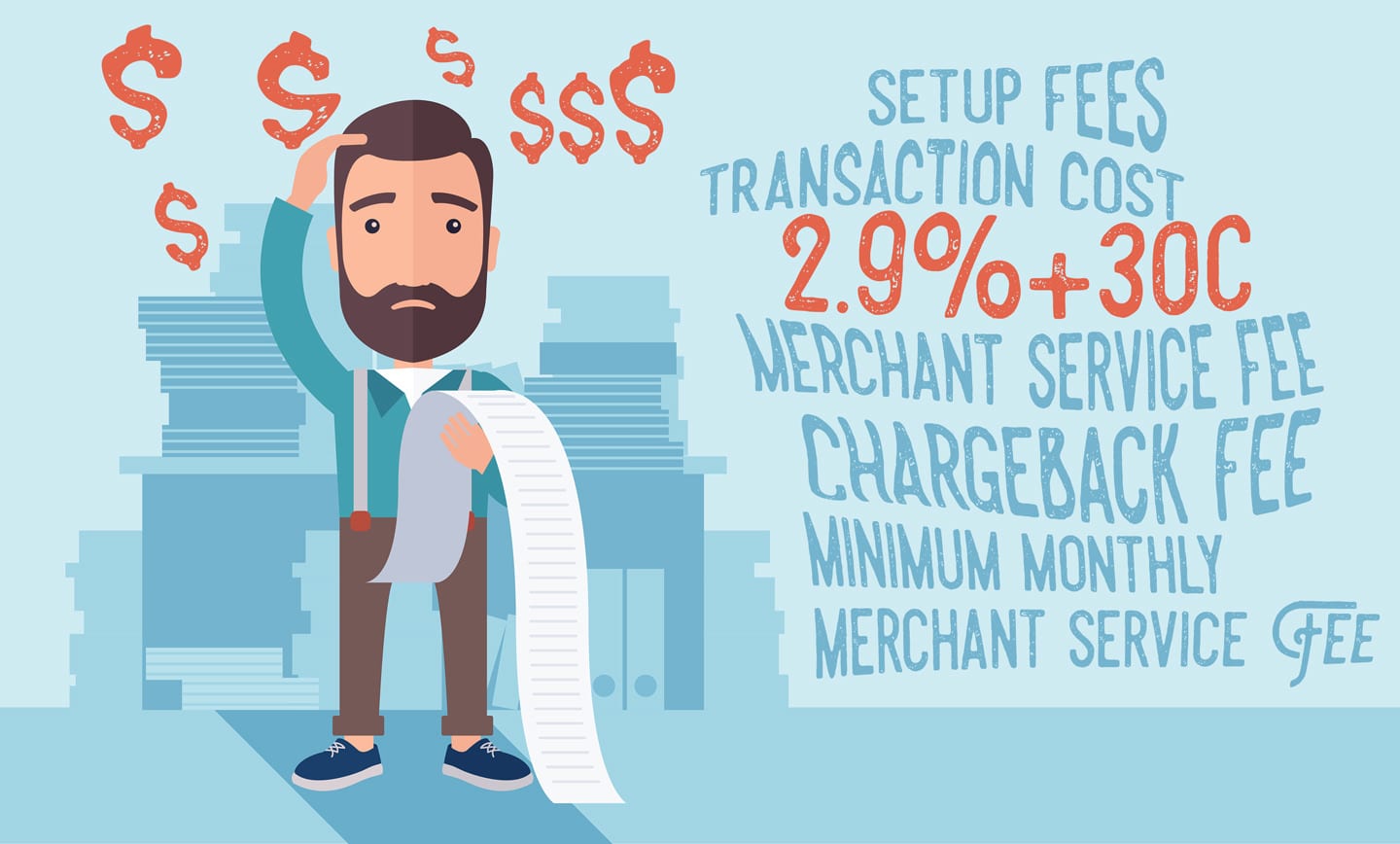
payments

To put this in perspective, Europe recently passed legislation capping the interchange fees on credit and debit cards to the point where these fees are now 2-3 times higher in the US than they are in most European countries. Yet, payment gateways and issuing banks are still making enough money to continue operating profitably in Europe. Hmm.

2. They like to keep their fee structure hidden.

Payment gateways and processors have long played the hidden fee game. This is one area in which modern gateways like Stripe and Sezzle have made progress, by using simple, blended pricing models, but big problems still remain.

Merchant processing fees generally fall into one of two categories: (1) wholesale fees, and (2) markups. Wholesale fees are the interchange rates set by issuing banks and credit card companies. They are consistent regardless of which gateway you choose, so don’t waste your time trying to shop around for lower interchange rates. Markup fees are how your processor and/or gateway make a profit from your business. With the right gateway, these fees will be modest, but with the wrong gateway, you’re in big trouble. Some gateways make it as difficult as possible to know how much markup you’re paying by using bewildering terms and pricing models that would baffle even the most experienced business owner or retailer. Just a few examples include PCI fees, early termination fees, monthly minimum fees, statement fees, IRS report fees, and batch fees.

If you’re a large enough retailer, finding an interchange plus pricing model is usually the most transparent and cost-effective. Tiered pricing is traditionally the murkiest, including the most hidden fees. The newer gateways are using a blended model that keeps pricing simple, but costs tend to be higher for high-volume businesses, especially on debit transactions.

3. They haven’t figured out mobile yet.

StatCounter reported earlier this month that in October more users around the world accessed the internet from mobile devices than from desktop computers, the first time in history that has occurred.
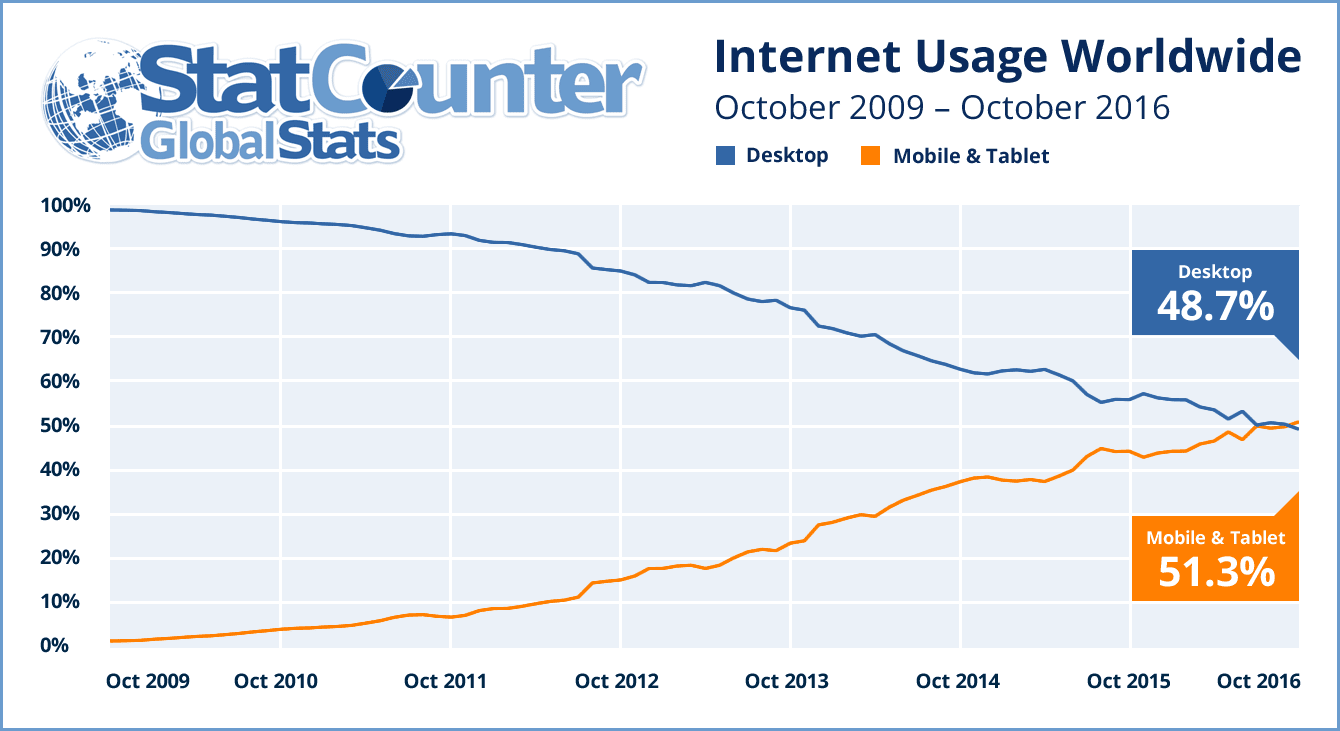
internet-usage-statistics-global

In addition, a recent Business Insider Intelligence report stated that by 2020, mobile commerce will make up 45% of total e-commerce. Personally, I think that will occur sooner than 2020, but you get the point. More and more people are using their mobile devices to access the internet, and to shop online.

Most ecommerce payment gateways, however, were developed to accommodate a payment network built on physical cards. At their core, cards are not mobile-friendly. They consist of multiple bits of numerical data that are difficult to memorize, and people are increasingly leaving their wallets and purses behind in favor of mobile phones.

Some gateways, like Apple Pay and Sezzle, have leveraged new technology to enable biometric and two-factor authentication for online payments. These technologies are much more mobile-friendly, requiring fingerprints, eye scans, or short PINs and texts to complete transactions. Let’s hope the trend continues.

4. They treat merchants unfairly on disputes and chargebacks.

Overall, chargebacks and fraud account for less than 1% of all transactions globally. However, the rate is higher for e-commerce transactions, and it’s growing. A typical e-commerce business offering physical products should see a 0.10% - 0.30% chargeback ratio, and a little over half of those will be for fraud. If you sell a non-physical product online, you’re likely to see a little higher ratio. And if you’re offering a subscription service, it will be higher still.

Chargeback fraud, also known as friendly fraud, is also a major problem for e-commerce retailers. This occurs when a consumer makes an online purchase, and then requests a chargeback from their issuing bank after receiving the purchased goods or services.

When a chargeback is approved, the merchant is accountable, regardless of the measures they took to verify the transaction. To add insult to injury, gateways will charge merchants a penalty when a chargeback occurs, because of the cost and risk to their own businesses (gateways can be shut down if their chargeback rates get too high).

Make sure you read the fine print in your gateway contracts, to better understand what the chargeback process looks like and how much you are penalized when a chargeback occurs. As a general rule, credit cards are most favorable to consumers when they request a chargeback, debit cards are in the middle, and bank payments are most favorable to merchants.

5. They haven’t figured out recurring payments yet.

A major shift is taking place in our economy, from a pay-per-product model to a subscription-based model. While recurring revenue provides businesses more steady cash flows, it requires companies to better manage a direct, complex, responsive, multi-channel relationship with its customers. Customers are absolutely key in this relationship, and rather than putting the focus of the business on the “product” or the “transaction,” subscription economy companies live and die by their ability to monetize long-term relationships rather than shipping products.
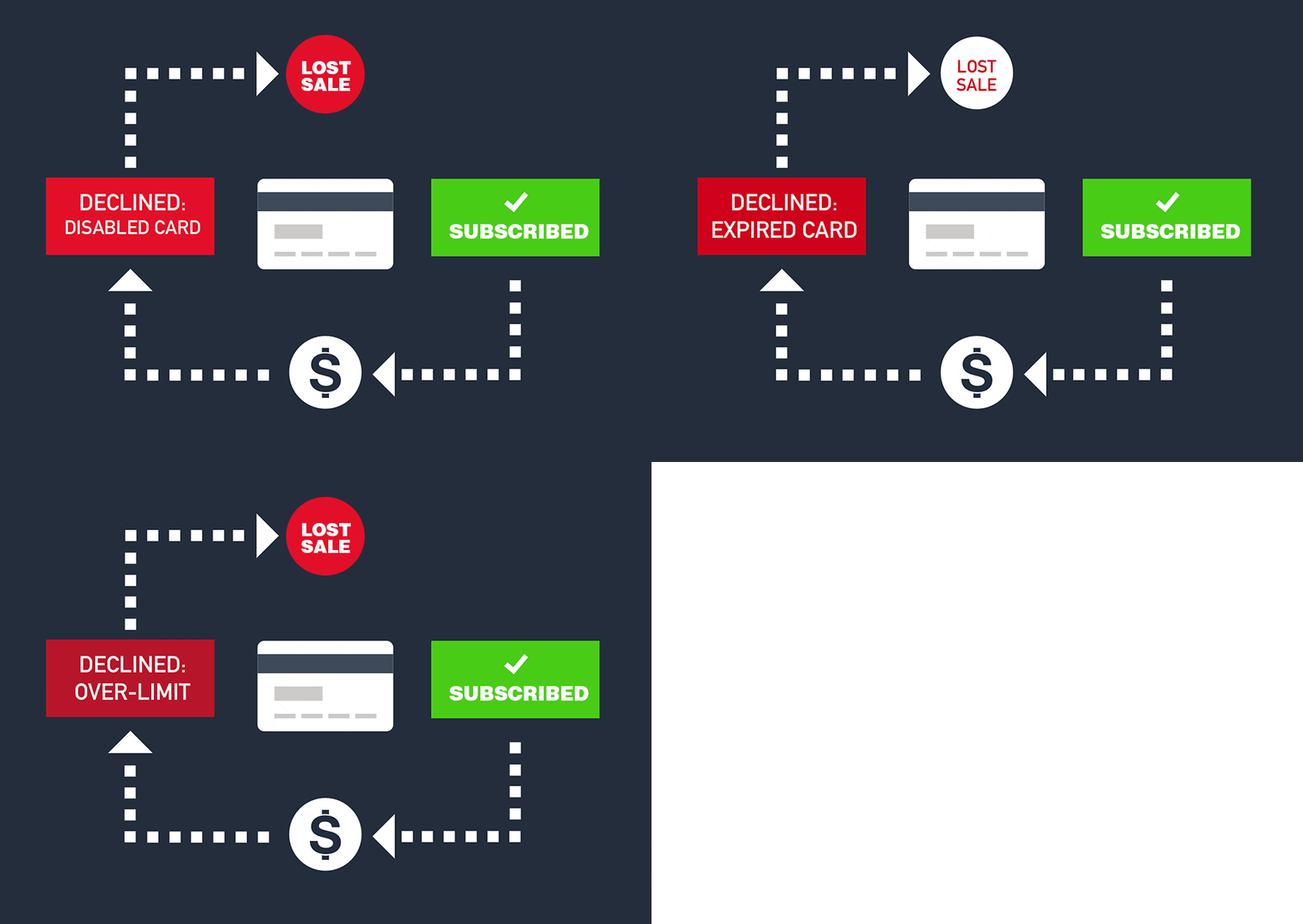
recurring payment

This poses a major challenge to payment gateways as well. Subscription-based companies typically see between 15-20% of recurring payments fail due to expired or canceled credit and debit cards. This is known in the business as “incidental churn.” Companies like Recurly have sprouted up to help businesses combat churn, but the fact is, cards are not an optimal payment method for recurring payments. An interesting solution some gateways are employing, including Sezzle and PayPal, is to enable customers to pay businesses directly from their bank accounts, which significantly reduces churn due to the fact that most people rarely change checking accounts. Many gateways are still behind the times, though, and for the subscription economy to continue growing, recurring payments must get better.

I would love to get your thoughts on these problems, and any more that I may have missed. Please reply in the comment section below. Thanks!


source http://www.smartinsights.com/ecommerce/payment-security/5-biggest-problems-ecommerce-payment-gateways/

Monday, 5 December 2016

A majority of customers think loyalty programs are effective at getting them to return

Chart of the Day: Customers around the world chose retailers with loyalty programs over ones which don't.

As this chart from Nielson shows, customers spending decisions are highly likely to be influenced by the presence of a customer loyalty program, with 65% of US and European customers reporting they'd buy from a retailer with a customer loyalty program over one that didn't, all else being equal.

A majority of those surveyed also reported they'd be more likely to continue doing business with a company that has a loyalty program, and on average over 60% said they'd be more likely to shop at online retailers if they provided similar loyalty benefits as in-store retailers.

That said, before you go rushing off to start a customer loyalty program for your online store, there is one caveat. All the survey respondents for this data set were themselves already members of a customer loyalty program. This means they may be predisposed to value customer loyalty programs more highly than shoppers that aren't involved in customer loyalty programs.

retail-loyality-programs-popular-amoung-customers

  • Source: Nielson
  • Data: Over 30,000 online consumers in 63 countries in 2016, weighted to be representative of internet consumers by country.
  • Recommended Resource: Customer Retention Guide


source http://www.smartinsights.com/digital-marketing-strategy/customer-retention-strategy/majority-customers-think-loyalty-programs-effective-getting-return/

7 Little mistakes that will cost your Ecommerce business dearly

Make sure you avoid these costly ecommere mistakes at all costs

There are many ways to grow your ecommerce business. Similarly, there is a multitude of ways to kill it. If you have a well-designed site, good products, a smooth checkout process, and still aren't getting good conversions, you might be committing any of these below-mentioned mistakes that are fatal for all ecommerce businesses.

1. Not having a clear site navigational structure

Yes, it happens. Sadly, most of the ecommerce sites don’t pay much attention to their navigational structure. If your navigational structure is not clear, it will confuse your visitors, and they will feel lost. A good navigational structure will not provide a good user experience but will also help your customers find what they’re looking for quickly and easily. A poor navigational structure is one of the biggest conversion killers.

2. Neglecting product descriptions

One of the most common mistakes ecommerce sites make is the lack of a coherent product description. If you don’t believe me, ask any shopper, and they will have this grievance. One of the biggest concerns online shoppers have about shopping online is that they can't touch & feel the products before buying. But a well-written product description and clear product visuals for each and every product can eliminate these concerns. Improving product description is one of the easiest and fastest ways to improve your conversions. It's one of the final steps in moving your customer towards the checkout path, so it should be compelling enough to help them take the right decision quickly.

When writing your product descriptions always remember that it should not just describe your products but, should be written in a manner that it helps you in converting that initial interest into a sale.

Here’s an example from Fab.com who are doing it right:

well-written-product-description

3. Underestimating the power of social proof

Despite how clearly you’ve highlighted your products in the description, most people may not trust what you say about your products until the time you show them a social proof. Also, when in confusion whether to buy or leave the product, your potential shoppers will look for social proof. And, they’re much more likely to purchase a product with the highest number of positive reviews. This social psychology is the reason why social commerce is touted as the next big thing in ecommerce.

Here’s an example from Bananarepublic, they surely know how to use product reviews to get more sales:

using-product-reviews-to-boost-cro

If you’re not encouraging your customers to write reviews of your products and share it on social, you are leaving a lot of money on the table. So, don't just ask customers to write reviews, give them a reason to do so too.

4. Not implementing mobile first strategy

Mobile optimization should form the core of your online marketing strategy. We have reached a point where mobile optimization is more important than optimizing for the desktop experience. Why? Every day, more people are browsing and buying from their mobile devices. Do you know that 9 out of 10 mobile searches lead to action, and more than half lead to sales, and that trend is only going to go up in the next few years.

Having a mobile friendly website and mobile responsive email is one thing, but building your ecommerce experience with a mobile perspective is another thing.  It is crucial to remember that mobile commerce is here to stay, and every ecommerce website should pay utmost importance to this if they don’t want to lose their revenue.

5. Sending batch and blast emails

There was an era in ecommerce marketing when it was okay to target subscribers with batch and blast emails, but that time is over. In the present digital marketing scenario, failure to personalize your email marketing will be fatal for your business. Why?

Inbox is a personal space so emails must be personalized to the users receiving them. Your message should not look like you’ve sent the same to 10,000 other people else your subscribers will stop checking them and will ultimately unsubscribe. Don't just send blanket emails; send the ones that talk to your readers directly.

When sending emails always remember, your subscribers are real people. So, don’t forget to treat them like one too.

To learn how to personalize your emails take a look at this message from Expedia; they sent me this email after I searched hotels on their site:

personalised-email-example

6. Failing to provide excellent customer service

It’s not possible to create loyal customers without an exceptional customer service.  As per a research, 68% customers leave because they are unhappy with the service they receive. Offering a great customer service is the key to retaining your customers and takes your business to the next level. But, quite often it’s overlooked. A good customer service approach will help you build a long-term relationship with your customers.

7. Focusing only on acquisition

Although retention is something every ecommerce site knows they should focus on, still most of the marketing budgets are spent on acquisition. You spend a lot of resources to drive prospects to your site and make them a customer. Do not allow those resources to go in vain by taking your focus away from these customers. Do you know that it costs 6–7 times more to acquire a new customer than retaining an existing one?  Also, the probability of selling to an existing customer is 60 – 70% while the probability of selling to a new prospect is only 5-20%.

These are some grave mistakes, which are responsible for the failure of many ecommerce businesses. If you’re making all of them or any of them, it’s high time you correct them.


source http://www.smartinsights.com/ecommerce/7-little-mistakes-will-cost-ecommerce-business-dearly/

Using the RACE framework to review and improve an inbound marketing programme

We asked content marketing expert Stephen Bateman about how he uses the RACE framework to structure marketing campaigns for clients

Q. Yourself and Dave Chaffey of Smart Insights recently scoped out a project to improve the inbound marketing programme of a B2B telecommunications firm. Can you give us an idea of how RACE was utilised to scope out and plan the project?

Yes, the firm in question had been getting content from its agency for its inbound marketing programme for more than 18 months, and the team used the content to get “attention” from prospective buyers, but failed to generate the potential volume of qualified leads (MQL) they expected.

There are lots of reasons why the team felt underwhelmed by their content marketing and inbound marketing programmes, but this is what happened over time: The team kicked off its inbound marketing programme, with a documented strategy that identified goals, audiences, content, process and metrics, and 18 months down the line they realise that what worked before no longer works as well as it did, and they’ve lost track of all the additions, tweaks and changes they made to the programme and they’ve lost their way. So they need a fresh pair of eyes to come and see the stuff they no longer see clearly.

Using the RACE framework, we were able to evaluate every component in the inbound marketing process from top, through middle to bottom of the funnel. We used RACE as the checklist or syllabus, identifying the value of components in the running of a successful, scalable inbound marketing operation: The goals, audience and personas, storytelling and content types, promotion and distribution, mechanisms, lead magnets, conversion forms, navigation, customer journey, roadblocks, analytics and measurement.

Dave drilled the analytics, crunching the metrics and looking at conversion devices, whilst I looked at ways to grow stronger, more agile, and more innovative ways to create content to build value for protective customers, and the business.

As we worked through our analysis, we evaluated each component of the programme, logging our findings in the RACE spreadsheet, listing our ideas, and weighting our recommendations, so the team could prioritise our recommended remedial tasks.

Q. When Scoping out the objectives of a project with a client, what are the key methods you use to ascertain the opportunities to grow leads and sales for the business, as well as the probable solutions required?

RACE covers the full customer lifecycle or marketing funnel: Reach > Act > Convert > Engage (with an initial Plan phase for your goals and programme purpose.)

The four steps in the framework (R>A>C>E) map to your inbound marketing activities, which seek to engage your prospective customers throughout their decision-making journey, from awareness and consideration, through trial to purchase.

RACE planning framework

With the RACE framework it becomes easier to see the woods for the trees, and to focus on the components that will improve the lead-generation and sales opportunities for the business.

Of course, all activities in the inbound funnel are interdependent, some being in the top of the funnel and others further down, so we start at the top and work through to the bottom. However, often what you find is that the most wasteful leaks occur in the middle of your funnel, (like poor conversion forms,) so if improving search-friendly blog posts in the top of the funnel is a priority, only do this if you also improve the conversion forms, like a newsletter sign up, in the middle of your funnel. Spending money on the former would not result in improvements, unless you also did the latter.

By the end we listed 10 top priorities. These needed improving first and foremost. Hence, we could have put the accent on improving content quality, but instead we put the accent on improving actionable personas. In other words content problems are referred problems that stem from further up the process. See below:

content-planning-process

Q. Scope run-away is a common problem with marketing consulting projects – where a myriad of programmes are identified, and the project becomes larger than the client intended.

How can consultant best manage client expectations and how useful is the RACE framework for establishing a project's scope?

When you work as a consultant, being disciplined about your work packages and managing client expectations is critical to sanity and pay cheque. Being clear takes practice and working up a detailed consulting proposal takes time, and you need to know the value of your expertise, and how long key tasks will take, precisely. So RACE works at the proposal stage.

The framework is so granular at defining tasks, that we were able to offer two clear and distinct levels of intervention, each corresponding to a different timeframe and budget.

This way we avoided scope creep from the outset, by identifying for the client what was covered in each of our work packages, and the output and deliverable, as well as what fell outside the scope of the project. So, no confusion or misunderstanding.

After we concluded our work and we’d made our recommendations in person to the team, we were able to specify further work streams, like training workshops and seminars.

Q. When faced with a problem that could be addressed in multiple different ways, how do you assess which marketing technique or combination of techniques will be most effective?

When you’re faced with a multiplicity of possible actions, and you need to decide which tool or process will best improve marketing performance, it helps if you have the overview, and you’re on the receiving end of recommendations from expert contributions, and in-depth strategists and case studies.

Essentially, to give the best advice, you’ve got to be up to date, you’ve got to be a listener, a magpie, someone who is curious and constantly on the lookout for the best examples of best practice, observing and learning, so that you can in turn, pass your knowledge on to others.

In your tool bag there will be things you’ve experimented with yourself, with other clients, with your own business, that you can vouch for, and there will be others that you’ve observed and have been reported to you. In all cases its best knowing something works and being able to show the metrics that underpin the performance.

We also identified 6-8 tools across our 30 key categories of digital marketing tools - see full Martech options wheel.

tools-tools-tools

With our approach to using the RACE framework to review and improve an inbound marketing programme, we provide cases throughout from the digital ecosphere with performance metrics to underpin and justify our choices of solutions. This was the case for all the recommendations we made for improvement, including a proposed Interactive Marketing App, to be added to the top of our client’s inbound funnel, that we could justify with marketing intelligence data we collected from the case history.

Q. Often clients can be reluctant to make major decisions and lean heavily on the consultant to make big calls regarding strategy, as they trust their expertise. This can leave clients ill-equipped to continue with the optimisation of the project once the consultant moves on. How can consultants give their clients the tools needed to confidently make bold changes to their marketing strategy when they are needed?

The RACE framework is a distinct process model that acts like a syllabus, helping marketers put the RACE principles into practice. Dave and I are teachers in everything we do, and we’re collaborative in our approach, so although we won’t do the work for our clients, we do offer on-going guidance and ask for accountability.

We discussed the issue of accountability and the importance of analytics in our popular slide deck: 

Accountability moves the needle when it comes to action, and is good at ensuring work gets done (people don’t like change), so goal setting and reporting systems that measure the impact of future performance improvements are key to helping bring about the bold changes that are needed from a team that might otherwise struggle to find the confidence to drive big changes.

To give you an example, when we start work with a client we ask for access to analytics and we use a capability audit to assess the team’s inbound and content marketing prowess, plotted on a continuum.

This early assessment process helps the team consider their weaknesses and consider the risks of sticking with the status quo. When we review capability measures, we find they are a big motivator of future performance improvements.

However, the biggest step-change is mindset. Marketers are experienced at describing the value of their products and services. But to be successful with inbound marketing they need a different mindset, as experts, educators, and carers, who have the empathy and detachment from product to nurture buyers through the early stages of the journey.

So, once the team have worked through RACE, and reevaluated their audience personas, themes, calls to action, distribution channels, content types, editorial calendar, conversion devices and KPIs, we try to get them into the mindset of a magazine publishing company, that put the persona and the buyer lifecycle at the gear of the activity, rather than working under a campaign-driven marketing mentality.

That kind of mental step change takes time, but RACE is a formidable tool for staying on track and readjusting.

Q. Content marketing strategy tends to be constantly evolving – it’s the nature of our fast-paced industry. Given this, how does the RACE framework allow the consultant to remain involved as a client continues to optimise a project after it has been launched?

Strategies evolve. But RACE has permanence in activities across the lifecycle that will always require management and optimisation. So, for me, RACE gives me and my client a structure we can come back to, time and again. The components within the framework will evolve, but the framework itself is steadying.


source http://www.smartinsights.com/digital-marketing-strategy/using-race-framework-review-improve-inbound-marketing-programme/

6 Pieces of Advice for Getting Better Data in Google Analytics

How to use filters in Google Analytics to get more accurate data

In this article, we will explain how to receive more accurate data using filters.

For a start, keep in mind that filters in GA are designed to help you customize the data seen/viewed in GA, according to the purpose of the report you need to create. You can

  • Exclude data;
  • Include data;
  • Change data;
  • Search & replace data;
  • Set up an advanced filter.

First Things First: How to Add a Filter

Filters are added only within the “View” menu and here you can create many views if required. A view of the website is basically a copy of the GA data with different settings applied, e.g. you can set access rules, determine the goals for your website, etc. For further information about what the view is and how to add a view check out this material.

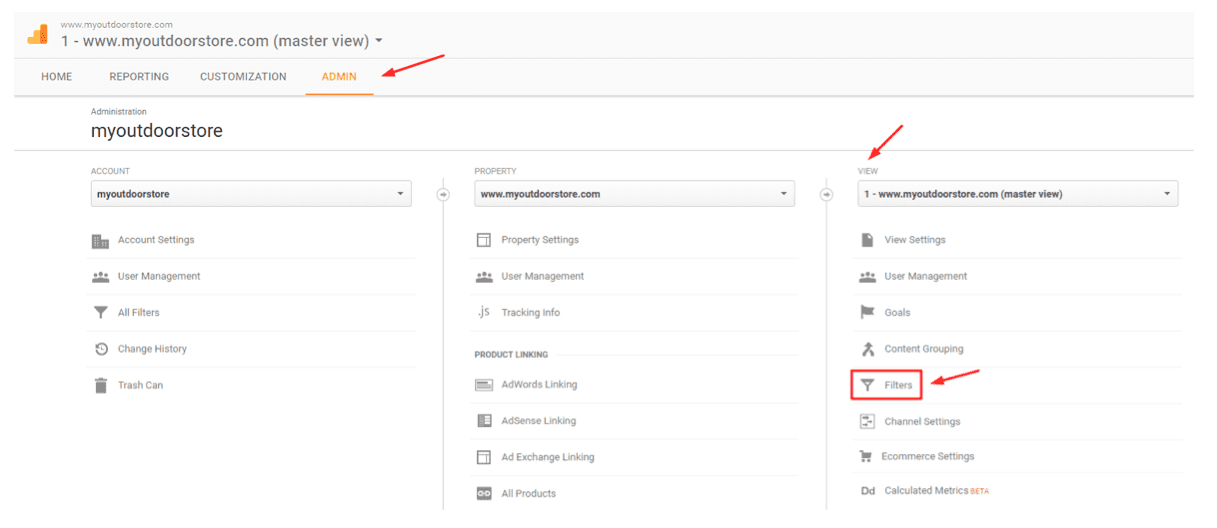
Now, log into your GA account, select a “View” menu, and press the “Filter” button.

google-analytics-filters

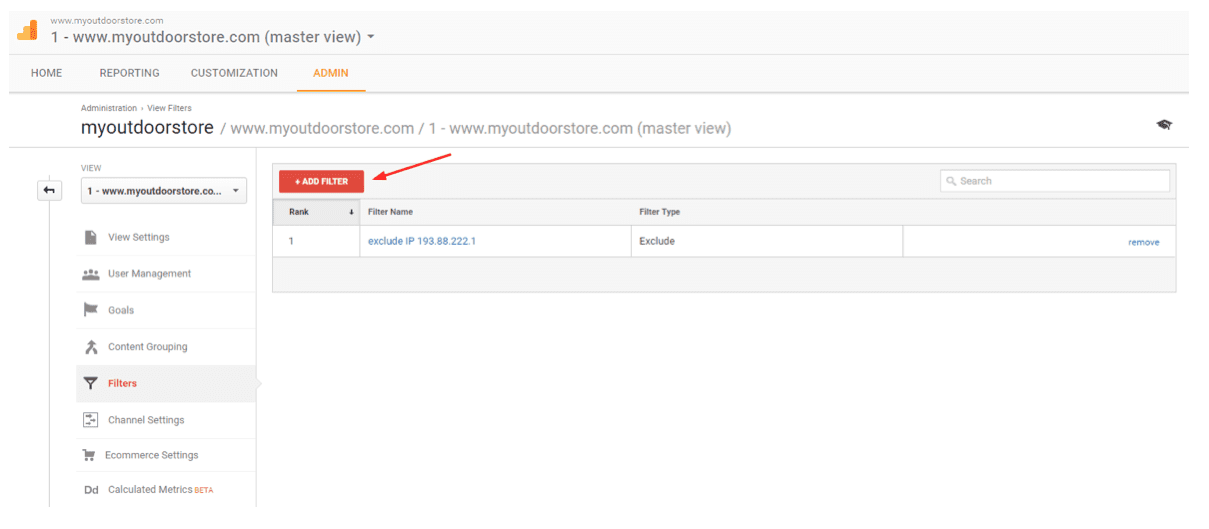
  • Click on the “+ADD FILTER” button to add a new filter.

Add filter

  • Select a filter type thoughtfully.

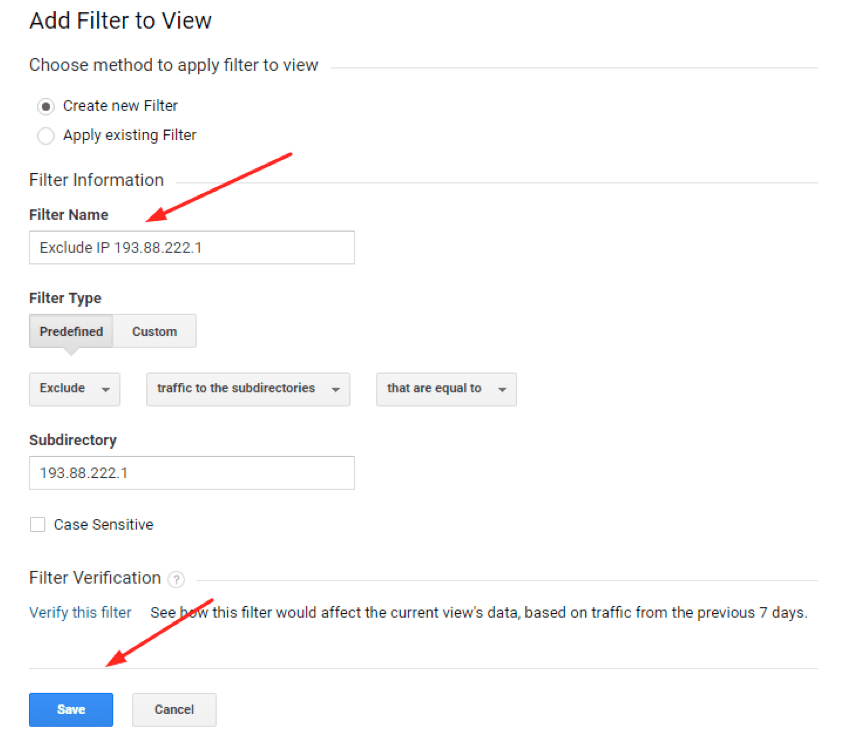
GA offers two types of filters: predefined and custom filters. The former are the templates for the most commonly used filters. The latter allows you to find the solution for any task by customizing your filters to achieve a specific goal. Using a custom filter is recommended for advanced users. Either way, remember to get a correct filter name and save the settings of your filters. See the following example:

Correct: exclude IP 193.88.222.1

Incorrect: qwerty12345


Add filter to viewBefore you apply any changes, make sure to consider these details:

  1. Don’t delete or add filters to your original view; experiment with copies of your website views because when you delete a view that particular historical perspective of data is gone.
  2. Google Analytics applies filters exclusively to data that would be added after creating the respective filter, e.g. you cannot filter the data you already have.
  3. Filters are applied in a particular order, in which they are set, so you should specify your selection carefully. It’s important to consider what filters to apply first, second, and so on.

Anatomy of GA Filtering: How to Get More Out of Your Data

Let us analyze the following example. There is a company X that works in e-commerce in Canada. It has an online store blog with lots of posts, and an active forum. They can ship their products within Canada only, but their website is visited by people from different countries, mainly the U.S. and the U.K.

Advice #1: Measure traffic from the local audience.

The visitors from the countries other than Canada don’t convert into sales. So, it makes sense to set the filter “country” like on the image below.


Add filter to view Advice #2: Exclude traffic from the company X employees.

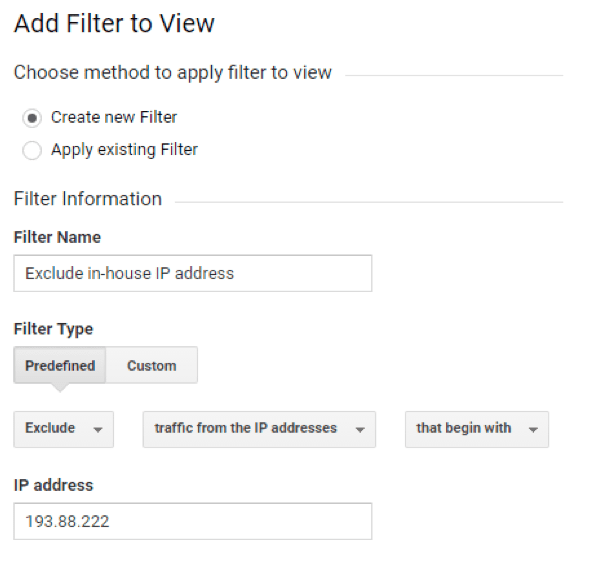
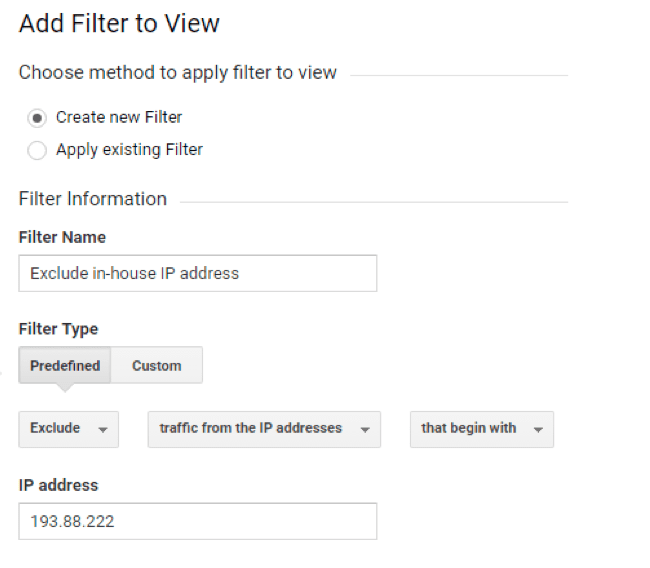
Naturally, the site is frequently visited by the company’s sales managers, marketers, content managers, and developers. Most of them visit this resource to stay updated, follow the latest industry trends, and participate in discussions on the forum. So, it makes sense to exclude this kind of traffic which does not convert into sales. In this case, we advise to simply exclude traffic from the IPs used by the company X employees. Set the filter as it is shown in the following screenshot.

GA exclude in house IP address

Advice #3: Combine data in a page view report.

Since Google is case sensitive, it’s possible to get data as shown in the following table:

Page Pageviews  


Page Pageviews
/page1.html 5 /page1.html 11
/Page1.html 4
/PAGE1.html 2

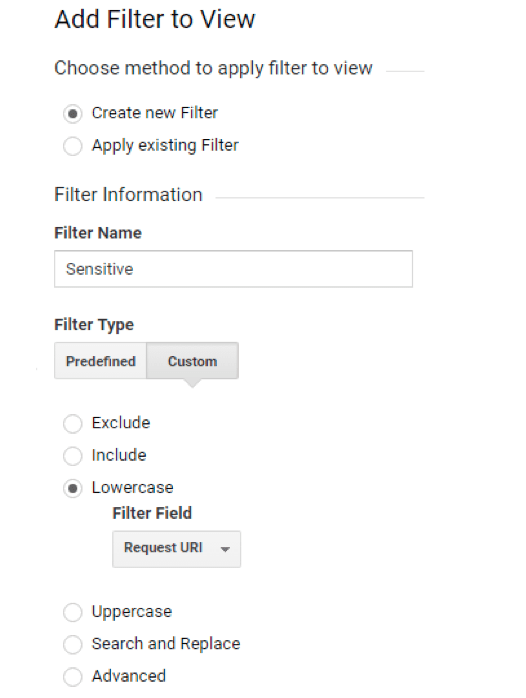
To analyze the obtained results with ease, apply the following filter in the view.


screen-shot-2016-11-07-at-16-52-24

Advice #4: Clean the data out of spam.

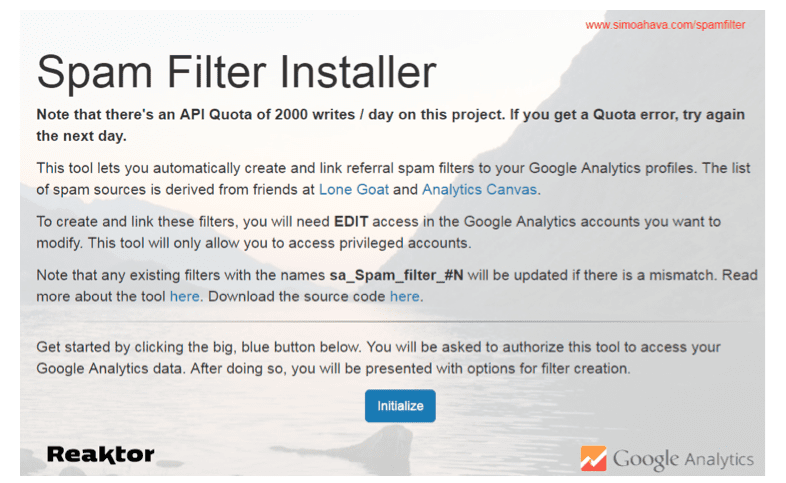
We recommend this tool developed by Simo Ahava (Google Developer Expert for GA), which allows you to identify and remove the fake hits to the website. They have an in-built database sufficient to accomplish most of these tasks. Here you can find the helpful spam filter tool.

Spam filter installer

Advice #5: Ensure to exclude data resulted from incorrect traffic.

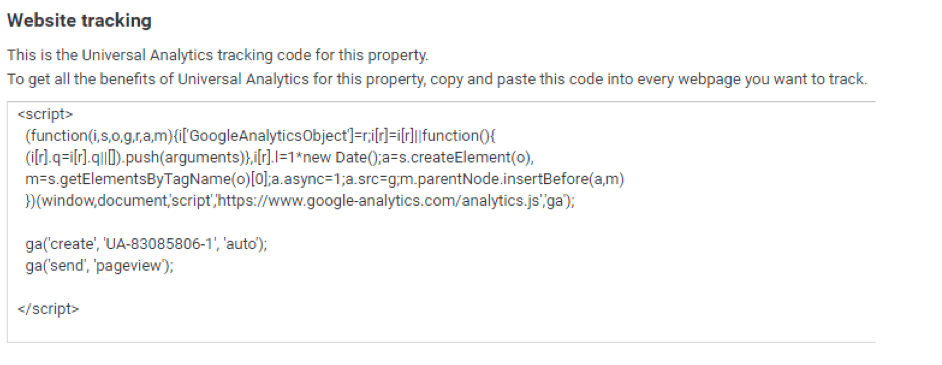
As you probably know from using GA, you have to add a Tracking Code to your website or mobile application before you start receiving GA data, as shown in the example below:

website tracking script

The issue is that anybody can copy your code (accidentally or specifically) and add it on their site or application, so your Analytics will collect information from there. Let’s consider the aforementioned in our sample case and exclude such traffic to receive better data.

Advice #6: Divide commercial and informational traffic.

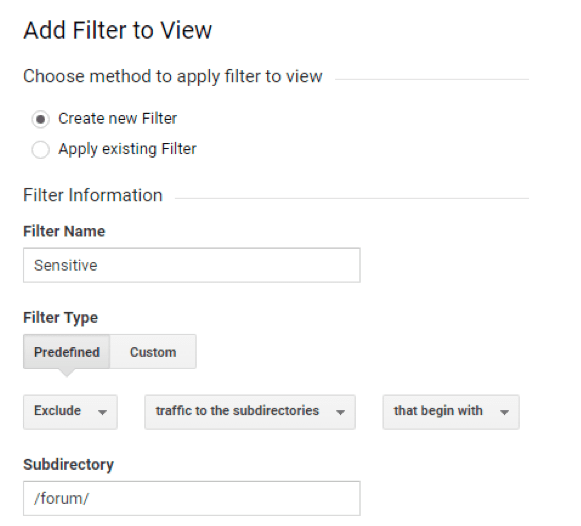
If you have a blog or forum on your site, you can exclude this kind of traffic by creating a filter as it is shown in the image below. Company X should definitely consider this option because they have a popular forum, which is also used by their employees.

dividing traffic with filters

Take Back to Work

GA offers a wide functionality and it is sensitive to details. So, a vital task during creating filters is to apply the correct settings, or else GA either will not perform any actions or will measure your data incorrectly. Follow these pro tips to win your way:

  • Identify and set the filter parameters with your KPIs in mind.
  • Discover the potential of predefined filters before you get to custom options.
  • Select the filter order before you start applying anything, especially if you consider using custom filters.
  • Hire a GA expert if you lack time to configure all the required settings, as receiving wrong data won’t allow you to make the right decisions.

If you need any help with GA filters fill in this form and we’ll help you get better data.


source http://www.smartinsights.com/google-analytics/google-analytics-setup/6-pieces-advice-getting-better-data-google-analytics/

Introducing RACE: a practical framework to improve your digital marketing

The RACE Digital Marketing Planning Framework

We created RACE to help digital marketers plan and manage their activities in a more structured way since we found that many don't have a marketing strategy. In this post, first published in July 2010 and since updated with the a new summary of digital marketing KPIs you should track, we show how you can simplify your measurement and reporting through RACE Planning.

You can find more details about applying RACE for Internet Marketing Planning in our free RACE Internet marketing template download and it is used by our Expert members to create digital plans using our Digital Strategy Toolkit.

To explain and fully define 'What Is Digital Marketing?' we created this popular Digital Strategy infographic in 2012 and updated in 2015 as shown below.  It shows the Key measures to set targets for and evaluate at each stage of the funnel.

Race Digital Strategy Funnel infographic
What does RACE Planning stand for?

The RACE mnemonic summarises the key online marketing activities that need to be managed as part of digital marketing. RACE covers the full customer lifecycle or marketing funnel from:

(Plan) > Reach > Act > Convert > Engage

There is also an initial phase of PLAN involving creating the overall digital strategy, objective setting and plan, so sometimes members call it PRACE, but we prefer RACE Planning for simplicity.  There's more detail at the end of the post in the infographic and the planning process is explained in detail in our RACE Digital Marketing Planning Elearning - click the link for free access to the first module.

We have defined four steps of engagement across the customer lifecycle, since in online marketing there is a major challenge in gaining interaction, participation with prospects and creating those all-important Leads after the initial customer touchpoint.

These interactions, covered in the Act step can take place over several channels and touchpoints such as web, mobile, social media and email contacts, so these leads need separate management from final conversion to online or offline sale through techniques like retargeting and assisted selling.

RACE consists of these four steps or online marketing activities designed to help brands engage their customers throughout the customer lifecycle.

  • 1. REACH. Reach involves building awareness of a brand, its products and services on other websites and in offline media in order to build traffic by driving visits to different web presences like your main site, microsites or social media pages. It involves maximising reach over time to create multiple interactions using different paid, owned and earned media touchpoints.
  • 2 ACT. Act is short for Interact. It's a separate stage since encouraging interactions on websites and in social media to generate leads is a big challenge for online marketers.  It's about persuading site visitors or prospects take the next step, the next Action on their journey when they initially reach your site or social network presence. For many types of businesses, especially, Business-to-Business, this means generating leads, but it may mean finding out more about a company or its products, searching to find a product or reading a blog post. You should define these actions as top-level goals of the funnel in analytics.Google Analytics Goals can include "Viewed product", "Added to Basket", "Registered as member" or "Signed up for an enewsletter. Act is also about encouraging participation. This can be sharing of content via social media or customer reviews (strictly, part of Engage).The specific goals and dashboard need to be defined for each business as explained in our Delivering results from digital marketing guide.  It's about engaging the audience through relevant, compelling content and clear navigation pathways so that they don't hit the back button. The bounce rates on many sites is greater than 50%, so getting the audience to act or participate is a major challenge which is why we have identified it separately.
  • 3. CONVERT. This is conversion to sale. It involves getting your audience to take that vital next step which turns them into paying customers whether the payment is taken through online Ecommerce transactions, or offline channels.
  • 4. ENGAGE. This is long-term engagement that is, developing a long-term relationship with first-time buyers to build customer loyalty as repeat purchases using communications on your site, social presence, email and direct interactions  to boost customer lifetime value. It can be measured by repeat actions such as repeat sale and sharing content through social media.We also need to measure percentage of active customers (or email subscribers) and customer satisfaction and recommendation using other systems.

Why RACE Planning?

We created the RACE Planning system to help give a simple framework to help small and large businesses alike take best advantage of the opportunities available from digital marketing.

In our research, we have found that, shockingly, many businesses don't have a digital marketing strategy. When creating a digital marketing strategy, knowing how to structure it and where to start is sometimes the biggest challenge!

There are so many tools and tactics available that it's difficult to know where to start. We hope RACE gives a structure to help you review and prioritise when there are so many options, but some options work better than others.

RACE is a practical framework to help manage and improve results from your digital marketing. Ultimately it's about using best practice web analytics techniques to get more commercial value from investments in digital marketing. We hope it will help simplify your approach to reviewing the performance of your online marketing and taking actions to improve its effectiveness.

Using KPIs to manage RACE

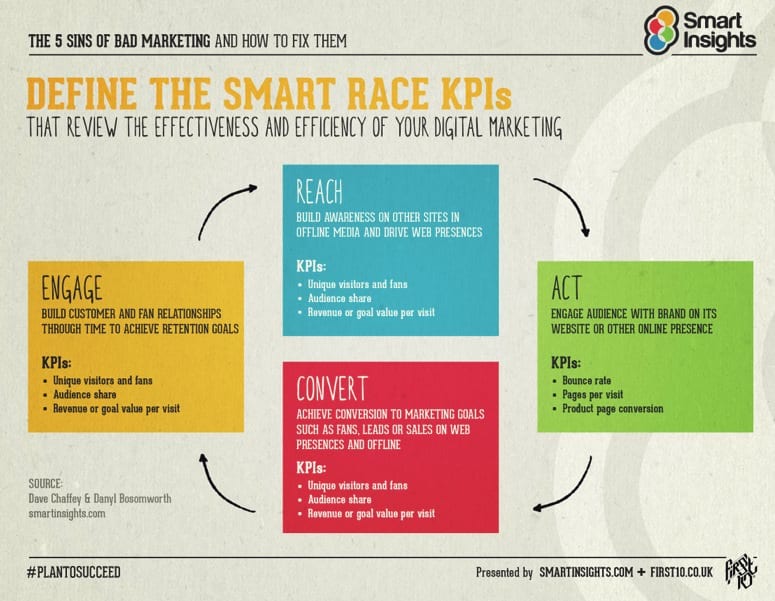
In our 2011 Marketing manifesto we explained that we believe growing business through digital marketing should be based on a sound evaluation and optimisation process using digital analytics showing which marketing activities are effective and which aren't. This diagram shows relevant key performance indicators (KPIs) that should be used at each stage.

RACE framework KPIs

Here's an example of our recommended measures in a simpler summary of RACE KPIs which could form a dashboard - the best dashboards show not only volume and how they change through time, but also the quality of visits and the value generated.

RACE KPIs

Many of these KPIs be created from Google Analytics although it needs to be customised for each business to record goal value or revenue per visit. For some other measures such as social mentions you need to pull in from other tools.

Marketing activities to manage within RACE

All of our guidance on Smart Insights from our blog posts to detailed guides and templates are structured according to RACE. This is a summary of some of the main activities which our guides, templates and free blog guidance cover - we have created an interactive version of this planning framework where you can click through to relevant sections on this diagram.

Of course, there are many more online marketing activities which are covered in our full sitemap of hub pages.


RACE KPIs

Google Analytics has over 60 reports displaying many more metrics and that's before you start segmenting your audience... Other web analytics tools have more... This makes it difficult to know what to report; you have to identify your "critical few" Key Performance Indicators which you report on regularly to review performance and identify problems. Here we have suggested just 3 KPIs for each area which apply for a retail site. We'll have more on these and related performance drive measures in later posts.

RACE is Social! Digital marketing is not just about your website

Digital marketing today is not just about your website, and in fact it never has been, partnering with other sites and "swimming with the fishes" has always been important.

But today, the popularity of participation in social media with web users means that how to reach, interact, convert and maintain ongoing engagement of customers through social networks is vital to the success of a brand. At each step in RACE you need to think how social media can help achieve your goals and how you can measure the effectiveness of social media.

RACE is integrated

Digital channels always work best when they're integrated with other channels, so remember that where appropriate, digital channels should be combined with the traditional offline media and channels.  The most important aspects of integration are first using traditional media to raise awareness of the value of the online presences and drive visitors to the website(s) at the Reach and Engage stages. Second, at the Convert and Engage steps stage customers may prefer to interact with customer representatives as part of the buying or customer service process.

So that's an introduction to the Smart Insight RACE framework. We hope you find it useful when you're planning and managing digital marketing!

Credits

RACE is an evolution of the REAN (Reach > Engage > Activate > Nurture) framework for web analytsts originally developed by Xavier Blanc and popularised by Steve Jackson in his book Cult of Analytics of which I'm a big fan.

We devised RACE since we wanted to develop our own approach for improving digital marketing and we feel Step 2 is more about initial interactions with a brand and in step 4, customer engagement is a longer-term process.

Through 15 years of advising marketers through my books and training I've found that, after time has passed, all that often remains from the course as a takeaway is a framework on which to hang future actions. C'est la vie! But busy people seem to like frameworks and mnemonics to structure their actions. To help digital marketers structure their thoughts, over the years I've created or been involved with these frameworks too - I hope you find they're useful - that's what we aim for - to make marketing life simpler and more profitable.

  • The 5Ss of online marketing (PR Smiths suggestions on goals from our Emarketing Excellence book)
  • SOSTAC® - a method for structuring digital marketing planning (again developed by Paul Smith)
  • CRITICAL - a practical way of improving Email Marketing
  • The 6 key digital media channels for traffic building options

And FWIW, it's why we're called SMART Insights - we believe the best marketers compete and win by a data-driven or insight-driven approach to marketing.


source http://www.smartinsights.com/digital-marketing-strategy/race-a-practical-framework-to-improve-your-digital-marketing/

Friday, 2 December 2016

Content creation is still the most effective SEO tactic but also the most difficult

Chart of the day: Marketers are finding the difficulty of external/internal linking  and web page load speed outstrips the effectiveness

In the November 2016 Search Engine Optimization Survey from Ascend2, they found that 57% of the 256 respondents understood that relevant content creation was the most effective tactics to boost their SEO traffic but at the same time it was also the most difficult. I'd suggest that this is mostly due it being time-consuming for marketers to create great content but also the competition to make it unique is high when it seems like everyone is doing inbound marketing.

ascend2-seo-survey-2016-nov

Interestingly, the two tactics that were marked are more difficult than effective were external linking and web page load speed. Generating links to your site is hard and requires dedication from everyone in the marketing team to create high-quality engaging content that other site/bloggers will want to publish for their followers and give you that all important link. Web page load speed on the other hand, is a careful balance of working with your web devs to streamline the code base as well as being prudent with the technology you add to the site, I'm sure most of you will have at least 5 maybe ten+ technologies tagged to your site that can slow your site down to a crawl.


source http://www.smartinsights.com/search-engine-optimisation-seo/seo-strategy/content-creation-still-effective-seo-tactic-also-difficult/